
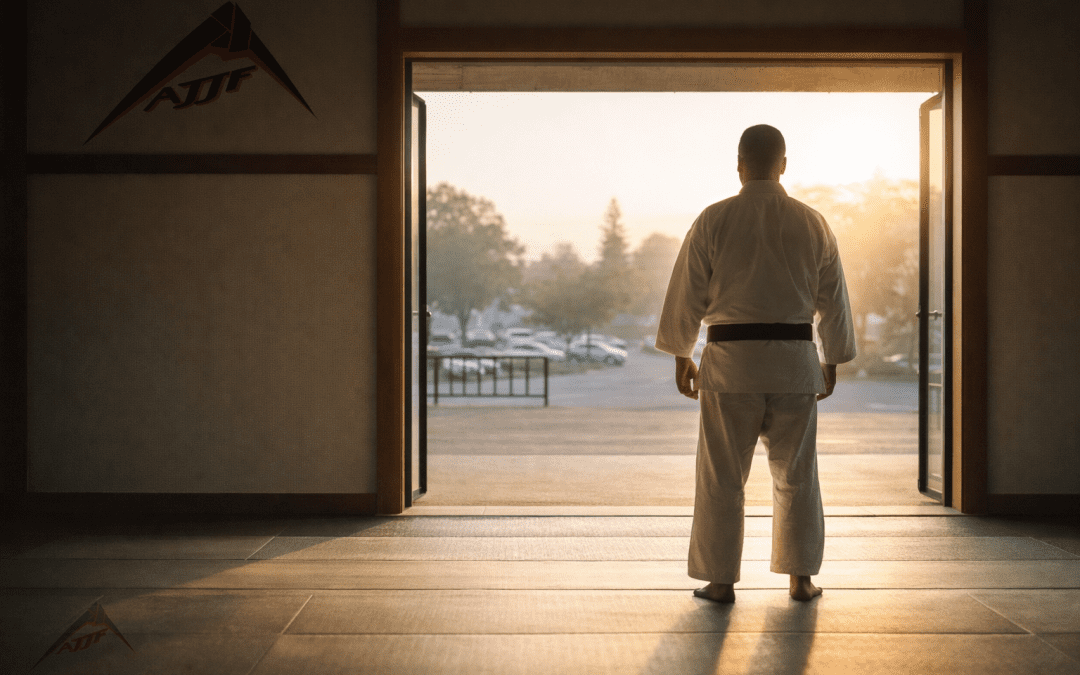
Kaizen is often translated as continuous improvement, but I’ve come to believe that definition is incomplete. Kaizen is not just what we practice on the mat, in the dojo, or during moments of focused discipline. Kaizen is the constant, never-ending test of who we are in the smallest, most unguarded moments of our lives.
This morning started beautifully.
I woke up feeling good. I had solid protein, took a moment to pet my dogs, and felt that quiet sense of contentment that doesn’t need an explanation. I got to the gym and put in a strong hour and a half—cardio, back work, real effort. While training, I listened to a podcast that centered on gratitude, kindness, and the idea that our actions—especially the unseen ones—send ripples outward. Some return directly to us. Some improve the lives of others. Some, perhaps, touch the world in ways we’ll never know.
That idea stayed with me.
Gratitude, I realized, isn’t passive. It’s not just a feeling—it’s a discipline. A deliberate practice. Taking time to appreciate a warm shower, a good meal, the ability to train hard, the chance to push ourselves physically. The teachers who shaped us. The people who stand beside us. The opportunity to serve others through what we do. Gratitude is the foundation that keeps the mind steady and the heart open.
I felt centered. Calm. Present. Grateful for the work I get to do as a Sensei and teacher. Grateful for the responsibility of guiding others along a path that has been shaped for us by generations of instructors before us—teachers who were, and continue to be, guiding lights.
Then came the test.
On the drive home, a lane closed ahead. Traffic slowed. A car rushed forward in the closed lane, got stuck, and forced their way over. I felt the irritation rise instantly. The judgment. The story we tell ourselves so quickly: Look at this idiot.
And then—I caught myself.
That moment mattered. Because Kaizen isn’t tested when things go right. It’s tested in traffic. It’s tested when we’re inconvenienced. It’s tested when no one is watching, when there’s no applause, no rank, no recognition.
I stopped the thought. Corrected it. Took a breath. Let the driver in. Offered a polite wave.
Small action. Big meaning.
It’s easy to point to the obvious good we do—the charity we give, the students we teach, the lives we influence in visible ways. Those things matter deeply. But the real question is quieter and more uncomfortable:
-
Am I decent when there’s no benefit to me?
-
Am I patient when I don’t have to be?
-
Am I kind when it costs me a few seconds, a little pride, a minor inconvenience?
-
Do I guard my thoughts as carefully as I guard my technique?
These are the moments that define us. Not the grand gestures, but the tiny decisions. The quick corrections. The willingness to choose clarity over ego, gratitude over irritation, kindness over being “right.”
Our arts—Kodokan Judo, and Danzan Ryu Jujitsu, and all the traditions we inherit—are not just systems of movement. They are systems of character. They teach us balance, adaptability, humility, and restraint. But only if we carry them off the mat.
Kaizen lives there:
-
In traffic.
-
In conversations.
-
In how we treat strangers.
-
In how we speak to ourselves.
The test never ends. And that’s a good thing. Because every moment gives us another chance to improve—not dramatically, not perfectly, but honestly. One small correction at a time.
And if we can do that—consistently, quietly, without needing credit—we move a little closer to the kind of greatness our teachers hoped we’d embody. Not just as martial artists, but as human beings.
— Gregory Poretz, Sensei, Kenshokan Dojo